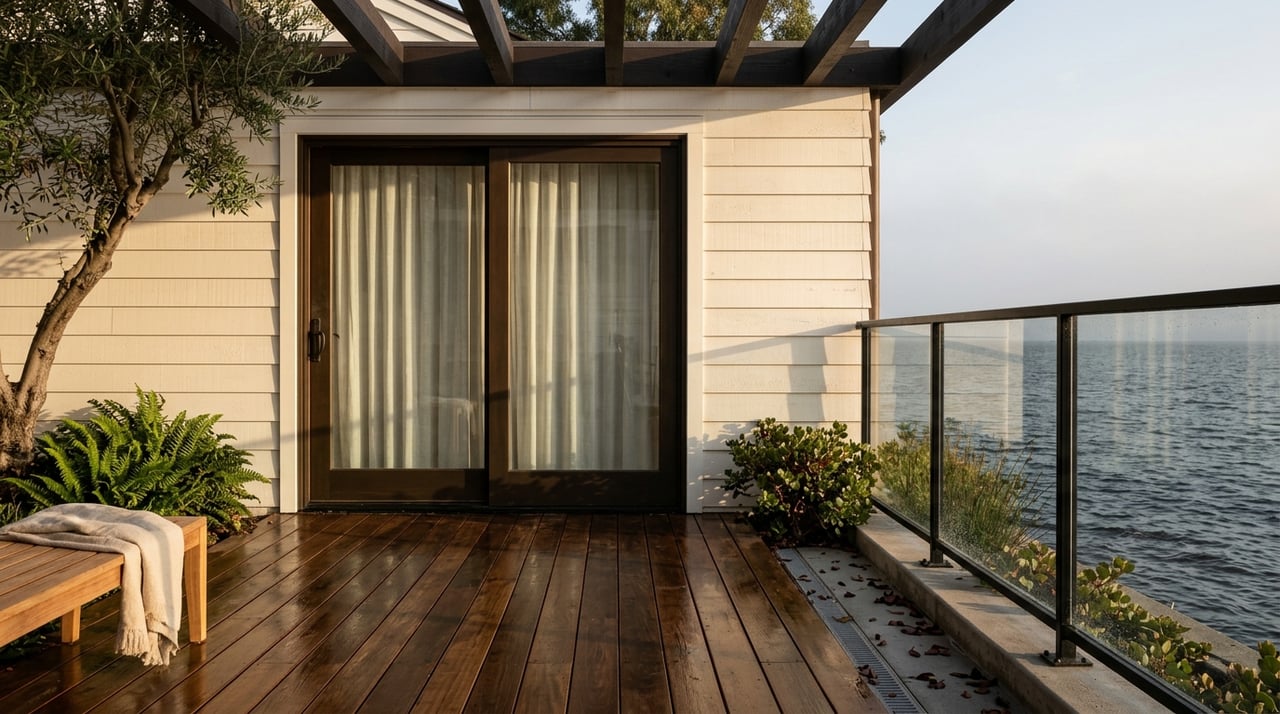
What the Sausalito Waterfront Lifestyle Feels Like
If you have ever wondered whether Sausalito feels like a full-time home or a postcard that happens to have houses, you are not alone. For many buyers, the draw is obvious: water views, ferry access, and that unmistakable Bay atmosphere. What matters more is how it actually feels to live there day to day, and that is where the real story begins. Let’s dive in.
Sausalito is a compact waterfront city just north of the Golden Gate Bridge, with about 7,100 residents in roughly 2.257 square miles. That scale shapes everything. Instead of feeling like a broad suburban area, it feels like a tightly defined shoreline town where the water is always part of your frame of reference.
For you as a buyer, that often translates into a stronger sense of place. Daily routines can feel more connected to the landscape, the downtown core, and the waterfront itself. It is one of the reasons Sausalito stands apart from both San Francisco and more typical Marin communities.
In Sausalito, the shoreline is not just something you look at from a distance. It is where people launch kayaks, walk through parks, and spend time outside on a regular basis. City resources note shoreline access at Dunphy Park, kayak launches at Schoonmaker Beach, Dunphy Park, and Turney Street, plus a public boat launch at Turney Street.
That changes the mood of everyday living. Even a simple walk can feel more active and more scenic when the Bay is right there. If you are drawn to places where outdoor time happens naturally rather than needing to be scheduled, Sausalito offers that rhythm.
Sausalito also has a strong maritime identity. The city lists multiple harbors and marinas, including Clipper Yacht Harbor, Sausalito Yacht Harbor, Richardson Bay Marina, and Schoonmaker Point Marina, along with yacht clubs, a community boating center, wooden-boat education, and Spaulding Marine Center.
That means boats are not just an occasional weekend sight. They are part of the visual and cultural backdrop of the city. Waterfront living here tends to feel active, working, and connected to the Bay, not polished off from it.
One of the most recognizable parts of living in Sausalito is the ferry. Golden Gate Ferry says Sausalito service runs daily, with intervals that vary from 15 to 120 minutes depending on the time of day, day of week, and season. The City of Sausalito also describes ferry service as a regular connection to San Francisco’s Ferry Building and Fisherman’s Wharf.
For some buyers, that ferry ride is a major quality-of-life upgrade. It can make the workweek feel more intentional and more scenic. Instead of treating the waterfront as a special occasion, you may find it built right into your normal routine.
Sausalito is not only about ferry access. Marin Transit Route 17 connects San Rafael Transit Center to Sausalito via Strawberry, Mill Valley, and Marin City, and Golden Gate Transit Route 120 links Strawberry, Marin City, Sausalito, and San Francisco.
That gives Sausalito a practical side that is easy to overlook. You can enjoy a place with a strong waterfront identity while still staying tied into Marin and the larger Bay Area. For buyers weighing Marin options, that balance can be a big part of the appeal.
Sausalito often feels like a place where you move through the day on foot, by bike, or in shorter local trips. The city’s public works department includes stairs, steps, pathways, parks, and shorelines as part of its public infrastructure. Downtown bicycle parking is also set up within a short walk of attractions.
That said, compact and walkable does not always mean effortless. The city notes large seasonal influxes of bicycle tourists, and downtown parking rules and time limits help manage demand. In practical terms, living here can mean becoming more aware of timing, parking, and visitor patterns than you might in a less destination-driven town.
Sausalito’s downtown and waterfront core play a big role in its personality. The dining mix includes cafés, coffee shops, sweets, and waterfront restaurants on and near Bridgeway. That concentration helps create the kind of place where grabbing coffee, taking a walk, and staying out longer than planned can become part of your usual week.
The city also formed the Downtown Sausalito Property Business Improvement District in 2024 to support events, marketing, cleaning, landscaping, and public-space improvements in the downtown business center. For residents, that matters because it supports the day-to-day feel of the area, not just the visitor experience.
Sausalito’s arts identity is unusually present for a small city. Public art appears on Bridgeway, at City Hall, and in parks, while the Sausalito Center for the Arts hosts exhibits, performances, lectures, and other public programming. ICB/ART also adds to that waterfront creative presence.
If you are choosing a home based on lifestyle as much as square footage, that can be meaningful. The town’s personality does not come from one single attraction. It comes from the way art, water, small businesses, and public space all overlap.
Part of what waterfront living in Sausalito really feels like is that it invites you out. The city’s event schedule includes Jazz & Blues by the Bay on summer Fridays at Gabrielson Park, along with Art & Harbor Days on the fourth Saturday of the month at Tracy Way, Ferry Landing Plaza, and Gabrielson Park.
These are the kinds of events that reinforce a social, walkable rhythm. You head out for fresh air or a quick errand and end up spending more time downtown. That pattern can make the city feel lively without needing a long list of plans every weekend.
Like many waterfront places, Sausalito changes with the seasons. Summer tends to be busier and more visitor-heavy, especially downtown. The city specifically notes large seasonal influxes of bicycle tourists, and the warmer months bring repeated waterfront programming.
For some people, that is part of the charm. For others, it is important to understand before buying. If you are considering a home here, it helps to picture not only the postcard version of a sunny afternoon, but also the day-to-day reality of sharing a small, popular waterfront town with visitors.
Winter and storm season reveal another side of waterfront living. Sausalito’s high-tide notices describe king-tide flooding as a risk in low-lying shoreline areas, and the city says it is already seeing impacts from climate change and sea level rise.
The city is also actively planning for these issues. Its materials mention flooding at Gate 5 Road and erosion at Swede’s Beach and Tiffany Beach, and the Shoreline Adaptation Plan is intended to help protect recreation, transportation corridors, and Bay access for water-related businesses.
That does not take away from Sausalito’s appeal. It simply means waterfront living here comes with real environmental and infrastructure considerations. If you are buying in Sausalito, understanding that practical side is just as important as falling in love with the view.
What often surprises buyers is that Sausalito does not feel like a standard Marin suburb with water nearby. It feels more immediate than that. The scenery, the ferry, the downtown core, the marinas, and the seasonal shifts all shape how you experience the town from one week to the next.
It is scenic, social, and highly walkable, but it is also compact, parking-sensitive, and tide-aware. That combination is exactly what makes it special. If you want a place where the waterfront is not background scenery but part of how you live, Sausalito offers a very specific kind of Bay Area lifestyle.
If you are drawn to places with strong character, daily Bay access, and a built-in sense of ritual, Sausalito can feel deeply rewarding. It may appeal to you if you value walkability, café culture, public waterfront access, and a commute that feels more memorable than routine.
At the same time, it helps to go in with a clear picture. Sausalito works best when you appreciate both sides of waterfront living: the beauty and the logistics, the charm and the constraints, the calm mornings and the busy summer afternoons. When that mix fits your lifestyle, it can feel hard to replicate anywhere else in Marin.
If you are exploring Sausalito or comparing it with other Marin neighborhoods, connecting with a local guide can help you narrow in on the right fit for your routine, priorities, and long-term plans. When you’re ready to talk through the details, Janeen Anderson would love to help.