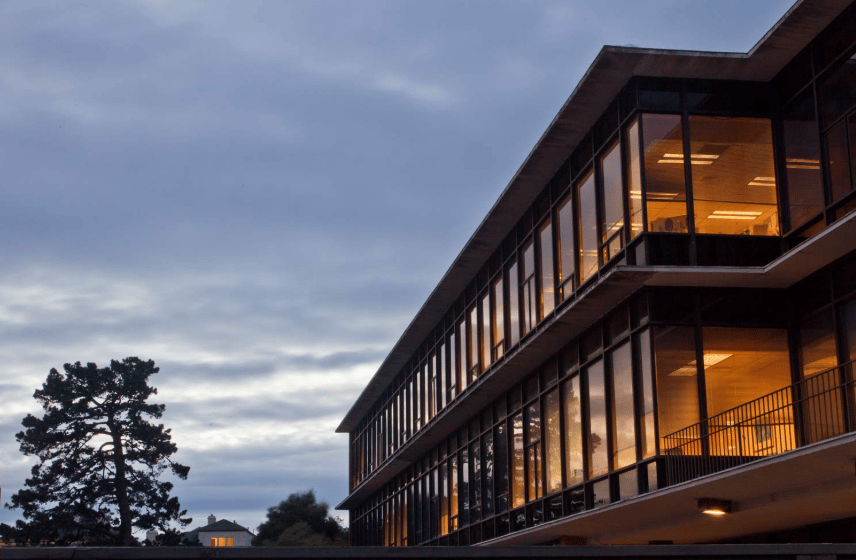
3333 California Street Laurel Heights Redevelopment: Plans and Progress
In January 2026, San Francisco set up a way to pay for new streets, sidewalks, utilities and a public open space at 3333 California Street. The money comes from property taxes the finished project hasn't started paying yet. For a site that sat in planning for a decade, that vote was the year's biggest milestone. Permit filings followed in February and June. The Chronicle reported that Prado Group, the developer, expected to start construction in late 2026. As of the latest reporting we can find, no groundbreaking has been confirmed.
So if you pass the old campus on the way to Laurel Village, the paperwork has moved much faster than anything you can see from the sidewalk. The rest of this post sorts out which parts of the project are funded, which are filed, and which are still estimates.
The UCSF Laurel Heights campus closed in 2023, according to the SF Standard. Residents had sued over the project's environmental review back in 2020, and that case was later settled. The San Francisco Chronicle described the project as "the largest housing development ever planned for San Francisco's Laurel Village," expected to break ground "ten years after it was first proposed."
Then 2026 brought a fast run of dates:
The district is officially San Francisco Enhanced Infrastructure Financing District No. 3. It covers 3333 California and the former California Pacific Medical Center campus at 3700 California, a few blocks west. Supervisor Stephen Sherrill introduced it.
Here's how it works. Once the old campuses become housing and retail, the property becomes worth more and generates more property tax. The district takes the City's share of that growth and uses it to pay for public improvements. It isn't a new tax on the surrounding blocks. The city's plan lists the eligible costs as demolition and abatement, streets, sidewalks, utilities, site work, publicly accessible open space, and affordable housing. The later bond resolution puts those facilities at about $351 million in 2025 dollars. The Board authorized bonds, but only on the condition that sale terms and final bond documents come later.
There's a second piece that rarely comes up. The plan also anticipates a separate community facilities district at 3333. It would levy service taxes to maintain the open space and streetscape, which the public can use but which stay privately maintained. The city documents describe this as a future mechanism. They don't say one has been formed yet.
This explains the timing. Leigh Lutenski of the Mayor's Office of Economic and Workforce Development told the Chronicle the district's passage was "perfect timing" for 3333 California. The Chronicle's opening paragraph credited the city tax incentives with helping to "jump start" a project that had waited a decade.
The city's approved plan for 3333 California calls for 744 homes. It also includes about 38,094 square feet of retail and commercial space, 13,933 square feet of childcare, and 2.87 acres of open space the public can use. The Chronicle's rounder figures are about 40,000 square feet of retail, a 175-spot childcare center, and five acres of open space overall. The 2.87 acres is the city's count of the part the public can access. Prado Group has branded the project Presidio Highlands.
Filing | Buildings | Homes | Reported status |
|---|---|---|---|
Phase one, reported February 12, 2026 | Three buildings, with retail along California Street and a public open space | 152 | Site permit application submitted December 2025, building permits filed |
Second set, reported June 21, 2026 | Center Building A, five stories | 64 | Permit requested |
Center Building B, eight stories, two basement levels | 92 | Permit requested | |
518 Walnut Street, five stories, three basement levels | 64 | Permit requested |
SF YIMBY reported that the permits put construction for the June buildings at about $196 million, a figure that doesn't include all development costs. James Corner Field Operations led the urban planning. Architecture is split among BAR Architects & Interiors, Handel Architects, Jensen Architects and Solomon Cordwell Buenz. Handel is designing Center Building A and the Walnut building.
The June numbers don't quite agree with each other. SF YIMBY's headline total is 200 homes, but the three buildings it lists add up to 220. The Real Deal's June 24 report gives 220 apartments as its total and says no construction timeline was disclosed for that phase. Together, the two filings cover somewhere between 352 and 372 of the 744 planned homes. All of them are applications or permit requests, and none of the reports says a permit was issued.
The financing plan includes a schedule, and it gives years without dates. It estimates construction at 3333 California from 2026 through 2031. Retail and childcare are penciled in for 2027 through 2030, and the affordable senior housing for the same window. The developer supplied those estimates, and they can change. With retail and childcare spread across a four-year window and no construction start reported, the plan doesn't give a firm year for the childcare center or the California Street storefronts.
The senior housing count varies slightly by document. The Board resolution says about 124 affordable senior units, while the financing plan and SF YIMBY say 125.
3700 California is further back. The approved plan there demolishes five of the six former hospital buildings and an underground parking structure. Part of the Marshall Hale building gets reused, and the nine-unit building at 401 Cherry Street stays. Prado Group is developing this site too. SF YIMBY's 2025 report put it at 530 homes: 298 general residential, 158 independent senior, and 74 memory-care units. The Board resolution instead describes about 492 dwelling units plus 74 institutional units, so the final count will depend on the permit plans. Lutenski told the Chronicle that construction at 3700 California is likely at least a year behind 3333.
All this paperwork matters to people who never plan to live in the new buildings, because of the shopping center between them. Speaking to the Chronicle, Supervisor Sherrill described both California Street projects as reviving properties that had become a blight on Laurel Village. He said retailers there have struggled without the foot traffic the hospital and UCSF campus used to bring. He also described what neighbors have told him they want:
"People want a pub where they can go and watch a game. They want more restaurant options. I have neighbors who want to downsize from a big house once their kids have left."
He told the Chronicle the planned day care at 3333 is sorely needed.
The storefronts show the gap he described. SFGATE reported that Sephora, at 3407 California Street since 1999, had closed, and that as of January 8, 2025, the space was vacant and offered for lease. That address is now listed as the Laurel Village location of the fitness studio solidcore. Its page doesn't give an opening date. The same January 2025 SFGATE piece named Peet's, Bryan's Grocery, Wells Fargo, Proposition Chicken, Chico's, Ace Hardware and Books Inc. among the center's businesses at the time. Books Inc. still lists its shop at 3515 California Street as an active location.
A few hundred new homes next door would bring some of that daily foot traffic back. The city's own estimate puts the first wave of new retail and childcare in 2027 at the earliest. Until homes on the old campus are actually occupied, Laurel Village depends on the households already in the neighborhood.
Each step from here will be public and checkable:
Until one of those happens, the old UCSF campus has full approvals, a funding district and more than 350 homes in filed paperwork, and no construction start anyone has reported.
If you live near Laurel Village and want to know what a decade-long project on your block could mean for your own plans, whether you're thinking about staying, downsizing or selling, I'm happy to talk it through. I follow these California Street filings closely so I can give you an answer based on what's actually happened. Janeen Anderson | Let's connect.
This article is general information, not legal, tax or financial advice. Consult a qualified professional about your situation.