What Upper Fillmore Street Changes in 2026 Really Mean
Last December, a small group of Pacific Heights residents walked into a movie theater that had been dark for five years. Cody Allen, the man overseeing the Upper Fillmore Revitalization Project, handed them floor plans and pointed at a stage that didn't exist yet. The seats were long gone. The building looked, by his own team's account, almost exactly like it did the day the fixtures were hauled out in early 2020. The tour was organized by the Pacific Heights Resident Association, and it was meant to answer a question that had been simmering on this street for two years: what is actually happening here.
Most of the answers people settled on fall into one of two camps. Either a tech billionaire is quietly buying up a beloved commercial strip and pushing out the businesses that made it worth loving, or a hometown investor is rescuing a corridor that the pandemic nearly killed. Both stories have some truth in them. Neither one is the story that matters most if you live here, walk this street, or wonder what your block will look like by winter.
On August 14, a group tied to venture capitalist Neil Mehta and his partner Cody Allen paid roughly $8.6 million for the building at 2035-2047 Fillmore, a one-story structure that once held Mio and A-Pizza. It's the group's eighth acquisition on the corridor since 2024, and it fits the pattern people have come to expect: buy, combine storefronts, install a single restaurant.
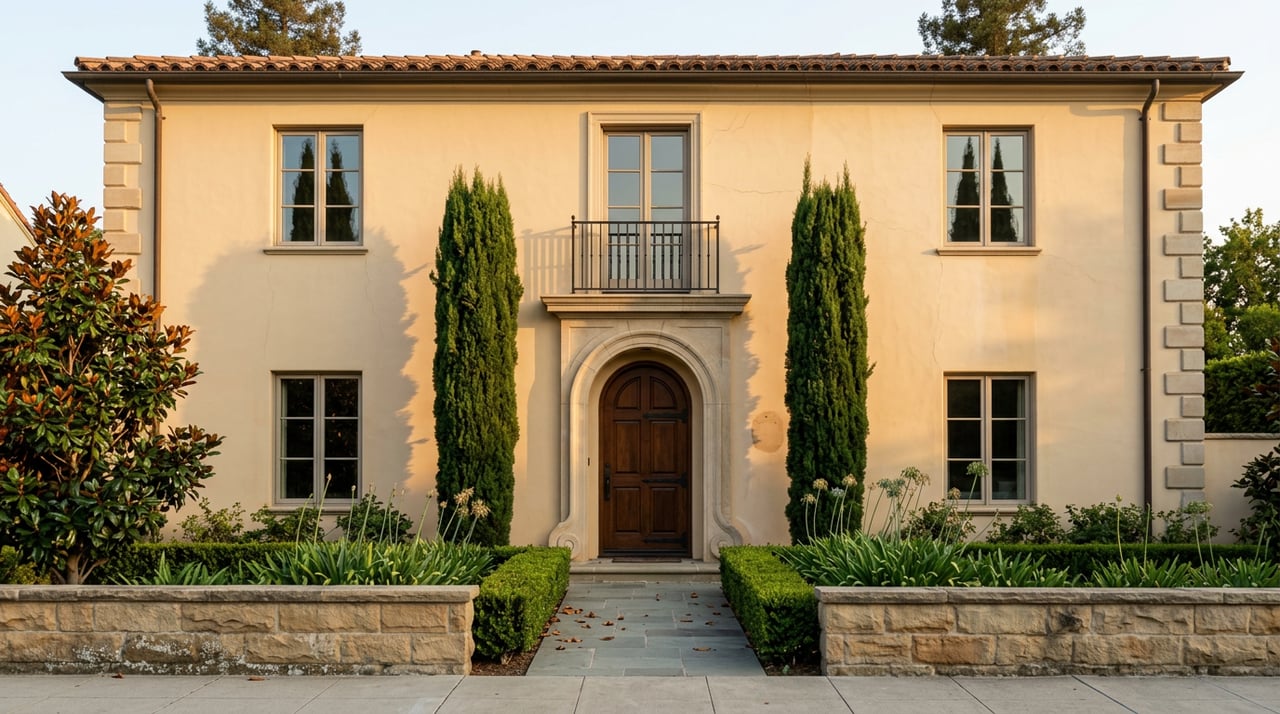
But look at the building itself before you decide what this purchase means. It has sat empty since 2022. It was built in 1926 as an example of Mediterranean Revival commercial architecture, with leaded glass transom windows and rope-molded Corinthian columns still intact, according to SF Cultural Heritage. Nobody was displaced when this sale closed, because nobody had been operating there for years. The Board of Supervisors extended, back in June, the deadline for the Historic Preservation Commission to decide whether the storefronts deserve formal landmark status, which means the building's future is genuinely unsettled and not simply a formality on the way to another restaurant announcement.
That distinction matters. The 2024 purchases that triggered the loudest backlash involved active leases and operating businesses. This one involves a corpse of a storefront that had already been empty for two years. Treating every Mehta acquisition as the same eviction story flattens a pattern that has actually changed.
The corridor's two most talked-about incoming restaurants are both tied to Michelin-recognized kitchens. Chef Pim Techamuanvivit, known for Kin Khao and Nari, is taking over the former Starbucks space at 2222 Fillmore with a project working under the name Khao Soi Ya, built around the Thai curry noodle soup she first tested as a pop-up at Nari. Down the block at 2001 Fillmore, the space that used to hold Noosh is becoming Monami, a Korean barbecue concept from Junsoo and Hyunyoung Bae, the team behind Michelin-starred SSAL on upper Polk. Monami was originally aiming for a fall 2026 opening, while the Thai project has no confirmed date yet.
What gets left out of the simple version of this story is La Méditerranée. The Mediterranean restaurant looked, in 2024, like the next legacy business to lose its lease to the same wave of purchases. Instead, it extended through the summer of 2028. Tim Omi, president of the Fillmore Merchants Association, told the San Francisco Standard that the general sentiment inside the association is now closer to relief than alarm, and that the project has held to its stated commitment not to bring in chain retailers, however hard it is to actually land small independent tenants on a strip like this one.
Not every closure on Fillmore this year traces back to Mehta at all. Designer Jonathan Adler shut his home furnishings store at 2133 Fillmore. Rocksbox closed its jewelry shop at 2208 Fillmore after less than two years in the space. Those are ordinary retail departures, the kind that happen on commercial streets everywhere, and folding them into the revitalization narrative gives one landlord credit or blame for a dynamic that's bigger than any single owner.
| When | What happened |
|---|---|
| February 2024 | Fillmore Reserve LLC, tied to Mehta, buys the Clay Theater and an adjacent building for $11 million |
| 2024 | Leases end for Ten-Ichi, Starbucks, and Alice + Olivia; all three depart |
| October 2024 | Mehta commits $100 million to the Upper Fillmore Revitalization Project |
| December 2024 | La Méditerranée signs a lease extension through summer 2028 |
| April 1, 2026 | The Historic Preservation Commission unanimously approves the Clay Theater restoration plan |
| June 2026 | The Board of Supervisors extends by 90 days the deadline to evaluate landmark status for 2035-2047 Fillmore |
| July 4-5, 2026 | The Fillmore Jazz Festival returns for its 40th year, one year after nearly folding |
| August 14, 2026 | Mehta's group buys 2035-2047 Fillmore for $8.6 million |
| Fall 2026 | The Clay Theater is targeted to reopen |
Here's the part of the story that doesn't get nearly enough attention. The Fillmore Jazz Festival, a Fourth of July weekend tradition on this street since 1986, came close to not happening at all in 2025. The problem wasn't a landlord or a lease. Organizers faced a funding gap of roughly $400,000 for annual operating costs and briefly canceled the event before crypto entrepreneur Chris Larsen and his nonprofit Avenue Greenlight, along with other community sponsors, stepped in days later to save it.
This year the festival came back for its 40th anniversary, spread across 12 blocks from Jackson to Eddy, with three stages for the first time and more than 25 local and national performers. It remains, by most counts, the West Coast's largest free jazz festival, drawing upward of 50,000 people over the weekend. But the near-cancellation is the detail worth sitting with. Everyone on this street has spent two years arguing about a real estate investor's intentions. The event that actually vanished, if only for a few days, wasn't touched by any of that. It disappeared because a nonprofit ran short on sponsorship money, and it came back because one donor happened to write a check in time.
If you're trying to gauge the health of this corridor, the storefront turnover isn't where the real fragility lives. The civic infrastructure that keeps neighborhood institutions running year after year is thinner than the real estate headlines suggest, and it depends on funding relationships nobody outside the merchants association was watching until the festival almost didn't happen.
Separate from anything tied to the Revitalization Project, the corridor launched a new night market series this year called Fillmore After Dark. The August 21 installment brought a night market to Fillmore and O'Farrell from 5 to 9 p.m., paired with a Bingo & Bites event running from Geary to Turk starting at 4 p.m., with food from local vendors including chef Fernay McPherson of Minnie Bell's Soul Movement, plus live music and cocktails. It's a community-organized addition to the calendar, not a Mehta production, and it points to something the restaurant openings alone don't capture: the street's evening life is being rebuilt through several unconnected channels at once, not just one investor's plan.
The corridor isn't collapsing and it isn't being quietly taken over. It's splitting into two separate stories that deserve separate attention. The real estate side, for all the noise it generated in 2024, looks more stable than the early coverage suggested: a landmark theater on a real timeline toward a fall reopening, two well-regarded restaurant groups signed to fill long-vacant spaces, and a legacy tenant that got a longer lease instead of an eviction notice. The civic side is the one that needs watching, because the thing that almost disappeared here had nothing to do with a building sale and everything to do with a sponsorship gap that could resurface next year just as easily as it did in 2025.
If you're the kind of person who notices when a storefront changes hands or when a marquee finally lights back up, keep watching both stories. They're not the same one, and only one of them is likely to fix itself.
If you'd like a running read on how Pacific Heights and San Francisco's other neighborhoods are actually changing, block by block, Janeen Anderson is always glad to talk it through. Let's connect.