Noe Valley vs Mission Dolores: Which Neighborhood Suits You?
Trying to choose between Noe Valley and Mission Dolores? These sister neighborhoods sit close together but live very differently day to day. You want the right fit for your routines, commute, and budget. In this guide, you’ll compare vibe, housing, pricing, transit, parks, and practical tradeoffs so you can move forward with confidence. Let’s dive in.
San Francisco does not have one official neighborhood map, and boundaries can shift by source. The San Francisco Chronicle notes that different agencies draw different lines, so it helps to reference landmarks and corridors rather than strict borders. You can explore that context in the Chronicle’s overview of how neighborhood maps differ.
A common description of Noe Valley places it roughly from 21st to 30th Street, with Dolores or Guerrero on the east and Diamond Heights or Grand View on the west. That footprint matches how many local groups describe the area, including the Friends of Noe Valley. Mission Dolores is widely considered the western slice of the larger Mission District, anchored by Dolores Park and the historic Mission San Francisco de Asís, stretching from Market Street toward Valencia and Church. You’ll often see it treated as a subarea of the Mission in city lists like this overview of San Francisco neighborhoods.
Noe Valley feels like a small village centered on 24th Street. You get tree-lined blocks, independent shops and cafes, and a relaxed evening pace. Locals often describe it as sunny compared with many parts of the city. For a quick snapshot of the feel, the Compass neighborhood guide calls it a “small town” experience along 24th Street and Church Street, with family-friendly energy and easy errands on foot. Explore that perspective in the Compass Noe Valley guide.
Mission Dolores is busy, flat, and highly walkable, with Dolores Park as its outdoor living room. Expect steady foot traffic on sunny days and an active restaurant and bar scene around Valencia and the 16th Street corridor. The park itself is a city landmark for lounging, views, and community events. Learn more about the park’s role in the area in the entry for Mission Dolores Park.
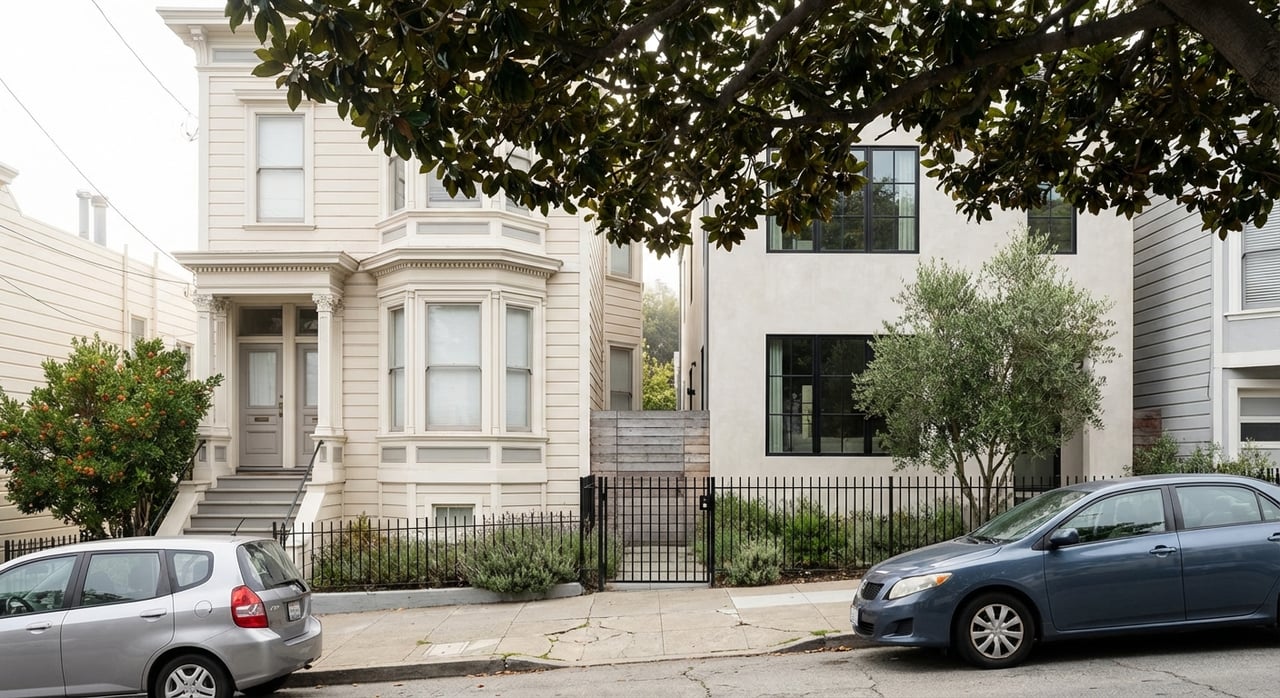
Noe Valley has a high share of Victorian and Edwardian houses, many of them renovated single-family properties or multi-level homes. You’ll also find small multi-unit buildings, often owner-occupied, and many homes with gardens or small yards. This larger-home mix helps explain why Noe Valley often carries a price premium compared with nearby areas. Local context on architecture and streetscapes appears in the Friends of Noe Valley neighborhood page.
Mission Dolores offers more variety in a denser setting. You’ll see classic flats and row houses, small multi-unit buildings, midcentury apartments, and newer infill condos. Units near Dolores Park and the commercial corridors tend to be smaller, with more condos and TICs than you’ll find in central Noe Valley. Expect a broader range of sizes and configurations within a few blocks.
Both neighborhoods are expensive by city standards. The main difference is scale: Noe Valley tends to have more single-family inventory and larger homes, which pushes medians higher.
The practical takeaway: Noe Valley usually commands a premium for larger homes and yards, while Mission Dolores often offers more options at lower medians, especially for condos and flats. Regardless of neighborhood, well-renovated homes near parks and key corridors can still move fast and draw multiple offers.
If you want quick BART access, Mission Dolores has the edge. The 24th St. Mission station sits close by for rapid rail into downtown and the East Bay. See the station details on the 24th St. Mission BART page. The area is also rich in surface transit routes and is flat for easy walking and biking.
Noe Valley is very transit accessible, just with a different mix. The Muni J-Church light rail runs along Church and San Jose Avenue toward Market Street and downtown. You can view the route and stops on the SFMTA J-Church page. For BART, many southern Noe Valley blocks look to Glen Park Station, while eastern blocks may use 24th St. Mission. Your exact address will shape what is fastest.
24th Street and Church Street pack in cafes, specialty shops, and local restaurants. Whole Foods, a weekly farmers market, and the Noe Valley Town Square keep day-to-day life convenient. Evenings tend to be calmer, which many buyers value after busy workdays. Get a feel for the corridor mix in the Compass Noe Valley guide.
Mission Dolores benefits from the Mission’s dining and bar scene, especially along Valencia and near 16th Street. You’ll find great options for dinner with friends and a steady hum on weekends. Expect more foot and vehicle traffic on popular blocks at night, especially in good weather.
Dolores Park is a city icon with sweeping views, playgrounds, and active courts. Learn more about the space in the overview of Mission Dolores Park. In Noe Valley, the Town Square hosts the farmers market and regular community gatherings, and smaller playgrounds are woven through nearby hills. For a sense of completed park projects citywide, browse the San Francisco park improvements list.
Both neighborhoods are home to many families. Noe Valley is often described as especially family-friendly thanks to its housing stock and small-scale streets. Mission Dolores is denser and includes a higher share of flats and rentals on some blocks. Public school assignments in San Francisco can vary by address and change over time, so always confirm with SFUSD before you buy. Nearby public schools often mentioned in the broader area include Harvey Milk Civil Rights Academy, Sanchez Elementary, Everett Middle, and Mission High. Verify current options and attendance details directly with the district when you are ready to focus on a specific home.
Safety varies by block and changes over time. For current context, review neighborhood-level crime data from the San Francisco Chronicle’s crime by neighborhood project and compare it with official SFPD updates before making a decision. Visiting at different times of day is also helpful to understand street activity and noise.
You do not have to choose based on online snapshots. I help you test the fit in real life: walk key blocks at different times, compare floor plans that match your needs, review vendor-sourced price data side by side, and weigh transit tradeoffs by your exact route. With a neighborhood-first approach and Compass resources, you get clear guidance and confident next steps. Ready to narrow it down? Let’s talk through your wish list and tour a few homes to see what clicks. Connect with Janeen Anderson.