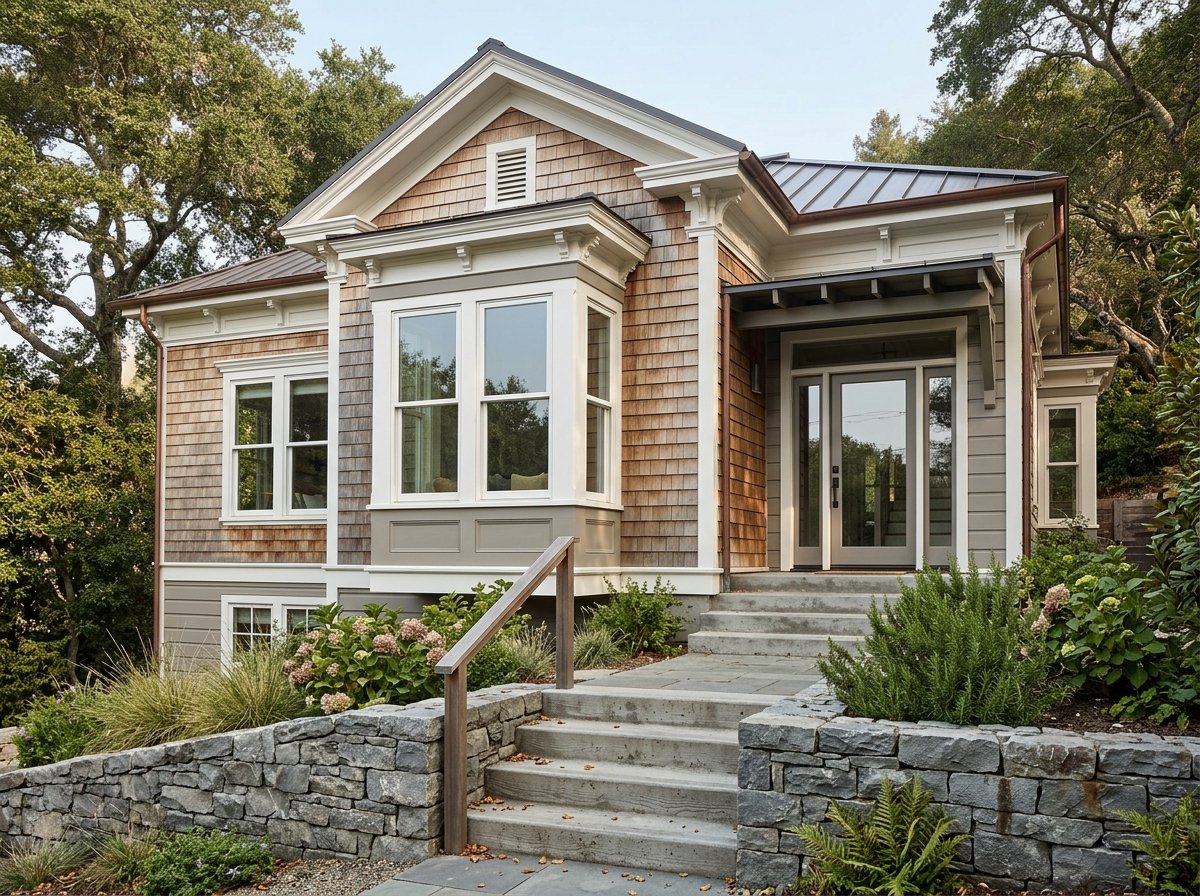
Finding The Right Single-Family Home In Mill Valley
Wondering why one Mill Valley home feels like a walk-to-town cottage and another feels like a private retreat in the trees? That is one of the biggest reasons buying a single-family home here can feel more nuanced than in a typical suburb. If you are trying to balance commute, outdoor access, lot usability, and neighborhood feel, Mill Valley gives you real options, but the right fit depends heavily on where you look. Let’s dive in.
Mill Valley is a compact city of about 4.8 square miles with roughly 14,000 residents, located about 14 miles north of San Francisco. The city describes itself as a full-service community with distinctive residential neighborhoods, plus a larger unincorporated Mill Valley area outside the city boundary. That mix is part of what gives Mill Valley its variety.
The first thing to know is that a Mill Valley mailing address does not always mean the property is inside Mill Valley city limits. Areas such as Strawberry, Tam Valley, Homestead, Almonte, and Alto may carry a Mill Valley postal address while sitting outside the city boundary. If city services, regulations, or jurisdiction matter to you, this is an important early check.
Mill Valley is also very terrain-driven. The city’s planning documents show a place shaped by hillsides, canyons, bayfront edges, and a compact town center. In practical terms, that means your daily experience can change a lot from one pocket to the next.
Before you focus on square footage or finishes, it helps to get clear on how you want to live. In Mill Valley, location often affects day-to-day comfort just as much as the house itself. A beautiful home can still feel wrong if the lot, street pattern, or access does not match your routine.
A few priorities usually shape the search most:
When you know which of these matter most, the search gets much easier to narrow.
Downtown is the commercial and residential core around Lytton Square and Depot Plaza. The city says residential development wraps around the commercial center and includes cottages, apartments and condos, and single-family homes on both very small and very large lots. This is the most walkable part of Mill Valley thanks to nearby shops, commercial uses, and parks.
If you want a single-family home with quick access to daily errands and a real town-center feel, this area may stand out. The trade-off is that lot size, privacy, and street feel can vary a lot. Some homes feel tucked in, while others are much more connected to the activity of downtown.
The Sycamore and Tamalpais Park area is described by the city as relatively level, with a more conventional lot pattern than the hillside and canyon areas. Public amenities here include Sycamore Park, the skate park, the community center, and the downtown plaza. For many buyers, this translates to a more straightforward residential feel.
If you want easier circulation and a more traditional neighborhood layout, this pocket may feel more familiar. It can be a strong match if you want proximity to amenities without committing to a steeper hillside setting.
Blithedale and Cascade are defined by narrow, winding roads, dense redwoods, and canyon walls that screen many homes from view. City planning materials note that density near canyon floors averages about 4 to 7 homes per acre, while surrounding hillsides often drop to 1 to 2 homes per acre, and in steeper remote areas as low as one home per 10 acres. That topography is a major part of the appeal.
For you, this can mean a more wooded setting, added privacy, and stronger access to a trail-oriented lifestyle. It can also mean steeper sites, more complex driveways, and less level outdoor space than you may expect from the listing photos. These are often the homes buyers love emotionally, but they deserve a careful in-person look.
The city’s park system includes Blithedale Park and Cascade Park in these areas, both with trail or creek access. If immediate outdoor connection is high on your list, these neighborhoods are worth a close look.
Warner Canyon and Kite Hill show two distinct patterns. The lower area is more conventional detached single-family housing, while upper ridgeline sections can have lot sizes of 10 acres or more. East Blithedale also includes a mix of residential, office, commercial, open space, and golf-course edges.
Miller and Molino are another hillside pocket with narrow, winding roads, redwoods on slopes above Miller Avenue, more open vegetation lower down, and broad views over central Mill Valley from northeast-facing slopes. If you are drawn to outlooks, privacy, and a more secluded setting, these areas may offer the right feel.
These homes can be especially appealing when you want a sense of escape without leaving Mill Valley. Still, it is smart to look closely at access, street width, parking, and how the home sits on the lot.
The city says this area differs from the older hill neighborhoods because it was built to more contemporary subdivision standards. It includes larger-lot custom homes in Scott Valley, more traditional subdivision patterns in Alto and Enchanted Knolls, and larger condo and apartment development along the bayfront and Highway 101 frontage.
For single-family buyers, this pocket often feels like the most practical suburban option. You may find more conventional streets, easier Highway 101 access, and a broader range of home sizes than in the canyon neighborhoods. If your routine depends on getting in and out of town efficiently, this area can be easier to live with.
Mill Valley offers several versions of single-family living, but they do not deliver the same strengths. The right home often comes down to which trade-offs you are happiest making.
| Priority | Areas that may fit | What to keep in mind |
|---|---|---|
| Walkability | Downtown, Old Mill, parts of Sycamore/Tamalpais Park | Lot size and privacy can vary widely |
| Trail access | Blithedale, Cascade, hillside pockets | Steeper lots and roads are more common |
| Privacy and views | Miller-Molino, Warner Canyon, Kite Hill | Access and usable yard space may be less straightforward |
| Conventional suburban layout | Scott Valley, Alto, Enchanted Knolls | Feel can be less village-like than the core |
| Easier commute access | Alto, bayfront-adjacent areas, Highway 101 side | Lower-lying lots may need extra drainage and flood review |
In Mill Valley, the home is only part of the decision. The lot, the street, and the route in and out often shape daily life just as much as the floor plan. This is where a neighborhood-first approach really matters.
A few questions can help you compare homes more clearly:
These questions often reveal more than a polished listing description.
Mill Valley sits in a central part of southern Marin. The Mill Valley Community Center is 6.6 miles north of the Golden Gate Bridge and 7.2 miles south of San Rafael, which helps explain why the location works for a wide range of Bay Area routines.
Golden Gate Transit lists Route 114 as Mill Valley to San Francisco. Its park-and-ride information also includes Mill Valley lots at Seminary Drive and Highway 101, Shoreline Highway at Manzanita, and Shoreline Highway at Pohono. Marin Transit provides local bus service within Marin.
If you expect to commute regularly, access can be very different depending on which side of Mill Valley you choose. Homes closer to the downtown core may offer charm and walkability, while homes closer to Highway 101 can make regional travel feel simpler.
One reason buyers are drawn to Mill Valley is its connection to public open space. Mount Tamalpais State Park spans 6,300 acres and offers more than 60 miles of hiking trails that connect to a broader 200-mile trail system on neighboring public lands. Many trails also connect with Muir Woods National Monument.
The Dipsea Trail runs from Mill Valley to Stinson Beach, and the city says Mill Valley has more than 175 original steps, lanes, and paths that historically helped residents commute, shop, and get to school. That network is part of what makes the town feel so distinct.
If outdoor access is central to how you want to live, certain pockets will naturally rise to the top. If your priority is easier errands and a simpler daily rhythm, being closer to the commercial core may suit you better.
Lot shape and usability vary widely across Mill Valley. The city’s land-use plan notes that single-family density ranges from one home per 10 acres in remote hillside areas to seven homes per acre on flatter topography. Downtown residential areas also include single-family homes on both very small and very large lots.
That matters because flatter pockets often provide easier circulation and more usable yard space. Steeper hillside sites may trade some of that practicality for privacy, views, and a wooded setting. Neither is better across the board, but one may fit your lifestyle much better.
If you are considering property along the bayfront or another flat, low-lying area, pay extra attention to drainage and flood exposure. The city says portions of Mill Valley along Richardson Bay currently flood during king tides, and groundwater rises during the wet season. That does not make these homes a no, but it does make careful review especially important.
The best Mill Valley home search usually starts with a simple truth: you are not just choosing a house, you are choosing a pocket of town. Downtown convenience, canyon privacy, and flatter suburban practicality all exist here, but they show up in different places and come with different trade-offs.
That is why it helps to evaluate each home through the lens of your real routine. Think about how often you want to drive, whether you want trail access at the edge of your block, how much flat outdoor space you will actually use, and how important city-limits status is to you. Once those answers are clear, the right opportunities become much easier to spot.
If you want a thoughtful, neighborhood-led strategy for buying in Mill Valley or elsewhere in Marin, Janeen Anderson can help you compare the details that matter and move forward with confidence.