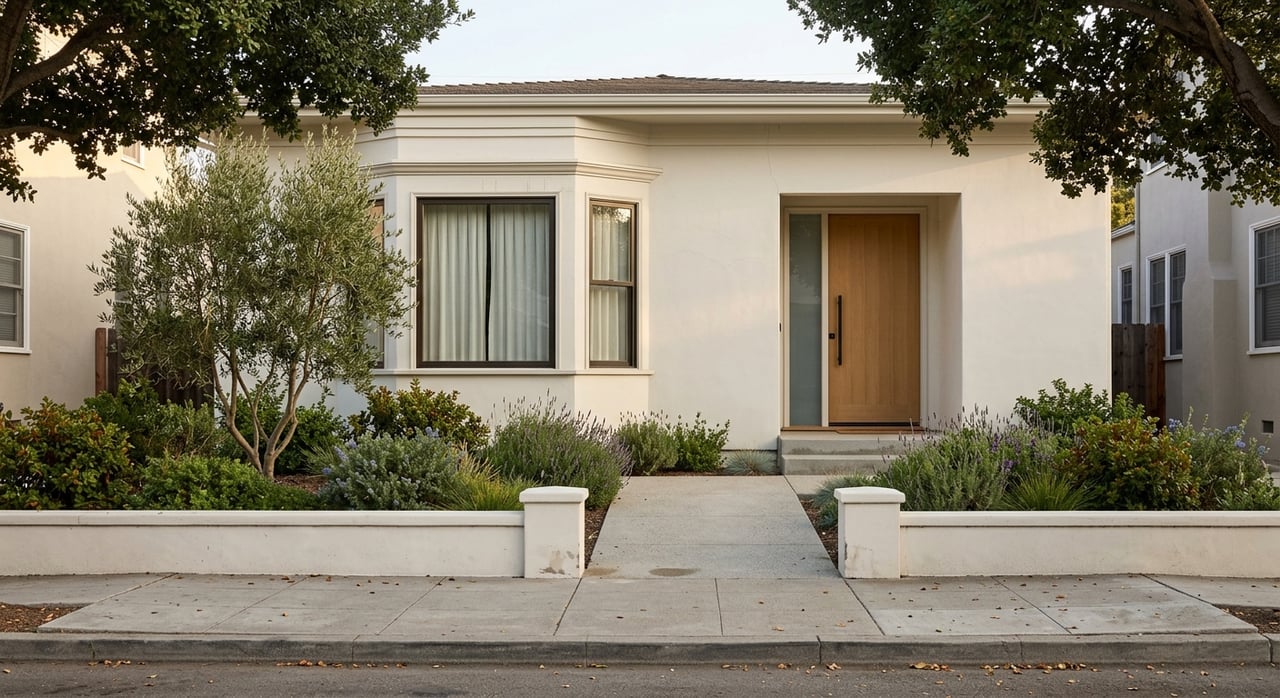
Jordan Park vs. Laurel Heights Homes in San Francisco
Trying to choose between Jordan Park and Laurel Heights? You are not alone. These two San Francisco neighborhoods are often discussed together, but they can live very differently depending on the exact block, street frontage, and how close a home sits to busier corridors. If you are comparing homes here, the real value is in understanding how the feel changes from one pocket to the next. Let’s dive in.
Jordan Park and Laurel Heights are close neighbors, and even San Francisco’s neighborhood boundary maps are intentionally approximate rather than fixed lines. That matters because homes that look similar on paper can offer a very different day-to-day experience depending on their position near retail, traffic, or quieter interior streets.
A combined market page for Jordan Park and Laurel Heights reports a median lot size of 3,920 square feet and an average single-family home size of 2,820 square feet. That is useful as a broad benchmark, but not as a clean neighborhood-by-neighborhood split. In practice, this is a block-by-block comparison.
Jordan Park is one of San Francisco’s historic residence parks, established in 1906. According to San Francisco Planning, residence parks were designed as early 20th-century garden suburbs with larger lots, landscaping, and curving streets that created a retreat-like setting.
In Jordan Park, that history still shapes the feel today. The historic district is known for wide streets, wide lots, homes set back from the street, and mostly two-story standalone houses. You will often see early 1900s architectural styles such as Edwardian, Foursquare, First Bay Tradition, and revival styles.
The overall impression is more detached, residential, and visually consistent. If you want a neighborhood that feels tucked in and calm, Jordan Park often stands out for that reason.
Laurel Heights developed later and has a different urban pattern. San Francisco Planning describes it as a moderately scaled mixed-use area with primarily residential buildings and neighborhood-serving commercial uses, with most buildings in the two- to three-story range.
This helps explain why Laurel Heights can feel a little more varied from block to block. Interior streets may feel quieter and more residential, while edges near California Street, Geary Boulevard, Presidio Avenue, and Laurel Village tend to feel busier and more active.
Laurel Village is the clearest daily-use hub in the area. Built from 1948 to 1953, it includes mostly one- to two-story retail spaces with midcentury modern storefronts and rear off-street parking, which gives the neighborhood a recognizable errand center.
If your top priority is a classic detached-house feel, Jordan Park usually has the edge. Its historic planning pattern emphasizes standalone homes, wider parcels, landscaping, and setbacks from the street.
That can create a more uniform residential rhythm as you move through the neighborhood. For many buyers, that translates to a more tucked-away atmosphere even though you are still in San Francisco.
Laurel Heights offers a different kind of appeal. It is still largely residential, but the neighborhood includes a stronger mix of housing patterns and more visible commercial edges.
That means one block can feel calm and residential, while another may feel more connected to everyday activity. If you like having a neighborhood center nearby, that variety may be a plus rather than a drawback.
If walkable errands matter most to you, Laurel Heights typically comes out ahead. Laurel Village includes everyday stops such as Cal Mart, Books Inc., Peet’s, Starbucks, Noah’s New York Bagels, Wells Fargo, and other neighborhood-serving businesses.
This gives Laurel Heights a true village-center feel. You are not just near a few scattered businesses. You are near a defined errand node that supports daily routines.
Jordan Park’s convenience story is a little different. The neighborhood association describes it as offering easy access to broader cultural and commercial corridors while keeping a more suburban-feeling residential character.
In simple terms, you may get the calmer home environment first and the shopping spine second. For some buyers, that trade-off feels well worth it.
Both neighborhoods can offer quiet residential blocks, but location matters a lot. Buyers should pay especially close attention to homes near Geary Boulevard, California Street, and other active edges where traffic and street activity are more noticeable.
This is one of the biggest reasons broad neighborhood labels only tell part of the story. A home on an interior block can feel very different from a home just a few streets away near a major corridor.
When you tour homes, it helps to notice not only the house itself but also:
Park access in this area is less about whether parks exist and more about which kind of park is closest to your block. That distinction can shape daily life more than many buyers expect.
Laurel Hill Playground at 251 Euclid Avenue is a key neighborhood asset in the Laurel Heights area. San Francisco Recreation and Parks lists a playground, baseball diamond, outdoor basketball court, picnic area, community room, and restrooms.
The broader area also includes larger recreation options. Mountain Lake Park offers a lake loop, off-leash dog area, tennis, basketball, fitness equipment, and a playground, while Rossi Playground includes baseball diamonds, a pool, playground, and courts.
If your routine includes playground visits, dog walks, or active recreation, the better question may be which specific home puts you closest to the type of park you will actually use most.
If you are thinking long term, Laurel Heights has one especially important watch point. UCSF has said the former Laurel Heights campus is closed and slated for a mixed-use village with retail, childcare, and 744 residential units.
That means the California Street side of Laurel Heights may continue to evolve. For some buyers, that signals added convenience and future amenities. For others, it means taking a closer look at how nearby change could affect traffic, activity, and neighborhood feel over time.
Jordan Park’s appeal, by contrast, is more tied to its established residence-park character. Buyers who want a more internally consistent historic residential pattern may find that especially appealing.
Here is the simplest way to think about the trade-offs:
| Priority | Likely Better Fit | Why |
|---|---|---|
| Detached-house feel | Jordan Park | Wider lots, setbacks, standalone homes, and residence-park planning |
| Defined errand hub | Laurel Heights | Laurel Village provides a clear neighborhood retail center |
| Interior residential calm | Either, depending on block | Quiet streets exist in both areas, but busy edges matter |
| Long-term change awareness | Laurel Heights | The former UCSF Laurel Heights campus area is expected to evolve |
When you compare homes in Jordan Park and Laurel Heights, it helps to go beyond square footage and bedroom count. The better questions usually come down to how you want the neighborhood to function for you day to day.
As you tour, consider these points:
These are subtle differences, but in San Francisco they can have a big effect on how a home feels after move-in.
Jordan Park is often the stronger match if you are looking for a more classic residential setting with detached homes, wider streets, and a more consistent streetscape. It tends to appeal to buyers who want a quieter, tucked-away feel while staying connected to the rest of the city.
Laurel Heights is often the better fit if you value daily convenience, a visible neighborhood center, and a little more activity at the edges. It can be a smart choice if you want a residential setting that still feels plugged into errands and neighborhood services.
In both cases, the smartest move is to evaluate homes at the micro level. In this part of San Francisco, the right block can matter just as much as the right neighborhood name.
If you want help comparing specific homes in Jordan Park and Laurel Heights, Janeen Anderson can help you look beyond the listing details and focus on the street-by-street differences that shape daily life.