Mill Valley vs Sausalito: Find Your Best Marin Fit
If you are torn between Mill Valley and Sausalito, you are not alone. Both offer a classic Marin lifestyle, but they feel very different once you picture your daily routine, your commute, and the kind of home environment you want. This guide will help you compare the two through a local, practical lens so you can narrow in on the place that fits you best. Let’s dive in.
Mill Valley and Sausalito sit close to each other, but they offer distinct day-to-day experiences. Mill Valley is the larger of the two, with 14,231 residents counted in the 2020 census, and the city describes itself as primarily suburban with distinctive neighborhoods. Sausalito is smaller, with 7,269 residents, and presents itself as a compact waterfront community just north of the Golden Gate Bridge.
That difference matters when you are choosing where to move. Mill Valley often feels more spread out and neighborhood-based, while Sausalito feels more condensed, bayfront, and centered around its waterfront identity. If your move is about matching your lifestyle to the right setting, this is a good place to start.
Mill Valley tends to appeal to buyers who want a more residential setting with a fuller in-town civic structure. The city highlights a broad local ecosystem that includes multiple schools and established neighborhoods. That can make the town feel more rooted in everyday routines and longer-term living.
The landscape also shapes the experience. Mill Valley is known for being extremely hilly and heavily wooded, which gives many areas a tucked-away, sheltered feel. From one neighborhood to the next, the atmosphere can change quickly because of the terrain, tree cover, and street layout.
One of Mill Valley’s standout features is its network of steps, lanes, and paths. The city says there are more than 175 original routes woven through town, which adds a distinct local character. If you like the idea of moving through your community on foot, but in a way that feels unique to the hillside setting, Mill Valley offers something hard to replicate.
Sausalito offers a different rhythm. Its identity is closely tied to the waterfront, with the city emphasizing arts, history, and bayfront culture. The result is a town that often feels more visually open and more connected to the shoreline.
Because Sausalito is compact, daily life can feel centered around the water, downtown activity, and ferry access. Marin County also notes that the Mill Valley/Sausalito Pathway connects directly to Sausalito’s cafes, shops, and art galleries. That supports a lifestyle where waterfront movement and public spaces play a bigger role in your routine.
Sausalito’s setting also comes with conditions that are more tied to the shoreline. The city has identified sea-level-rise vulnerability along its 2.5 miles of shoreline and is planning for impacts to flooding, recreation, and transportation corridors. If you are drawn to the bayfront setting, it is worth understanding that shoreline adaptation is a visible part of the local conversation.
Your commute can quickly become the deciding factor between these two towns. While both connect well into the broader Marin and San Francisco network, they do so in different ways.
Mill Valley has direct Golden Gate Transit Route 114 to San Francisco, and Marin Transit Route 17 links Sausalito, Marin City, and Mill Valley to the Mill Valley Community Center. In practical terms, Mill Valley reads as more bus-and-road oriented based on the transit options listed for the area.
Sausalito has direct Golden Gate Ferry service to San Francisco, and Golden Gate Transit Route 120 also serves the Strawberry, Marin City, Sausalito, and San Francisco corridor. If you want a ferry-first commute, Sausalito stands out more clearly.
Parking and traffic flow also shape the local experience. Sausalito notes that public lots and metered street parking downtown can be hard to find after midday, especially on warm summer days or holiday weekends. In Mill Valley, the city’s downtown project is focused on improving the flow and safety of car, bike, and pedestrian travel, which points to a different kind of circulation challenge and improvement effort.
If outdoor access is high on your list, both towns deliver, but in different forms. Mill Valley is the stronger choice if you picture wooded hills, trail access, and a more inland natural setting. Mount Tamalpais State Park includes 6,300 acres of redwood groves and oak woodlands, and access is directly tied to Mill Valley via Panoramic Highway.
That kind of outdoor proximity can shape your weekends and even your normal workdays. In Mill Valley, the natural environment feels built into the town’s identity, from the hilly streets to the wooded slopes and trail connections.
Sausalito’s outdoor appeal leans more toward the bayfront. The Mill Valley/Sausalito Pathway is a flat, wide 3.7-mile route that connects the two communities and forms part of the San Francisco Bay Trail. It offers an easy route for walking and biking, though Marin County notes it can be heavily trafficked during peak times.
In simple terms, Mill Valley offers more of a hillside-and-redwoods experience, while Sausalito offers more of a waterfront-and-pathway experience. Neither is better across the board. It depends on whether you want your outdoor time to feel more forested and vertical or more open and shoreline-focused.
For buyers comparing day-to-day logistics, the school setup is one of the clearest differences. Mill Valley has a broader public-school structure within town. The Mill Valley School District lists five elementary schools and one middle school, and the city notes one high school in town.
Sausalito’s public option is smaller and more centralized. Dr. Martin Luther King, Jr. Academy serves TK-8 in Sausalito, and Tamalpais High School in Mill Valley serves grades 9-12. The city also points residents toward private-school options.
From a practical standpoint, Mill Valley offers more in-town continuity in its public-school system. Sausalito offers a more compact structure that may appeal to buyers who prioritize waterfront living and a smaller-town layout. The right fit comes down to how you weigh school logistics against the lifestyle you want.
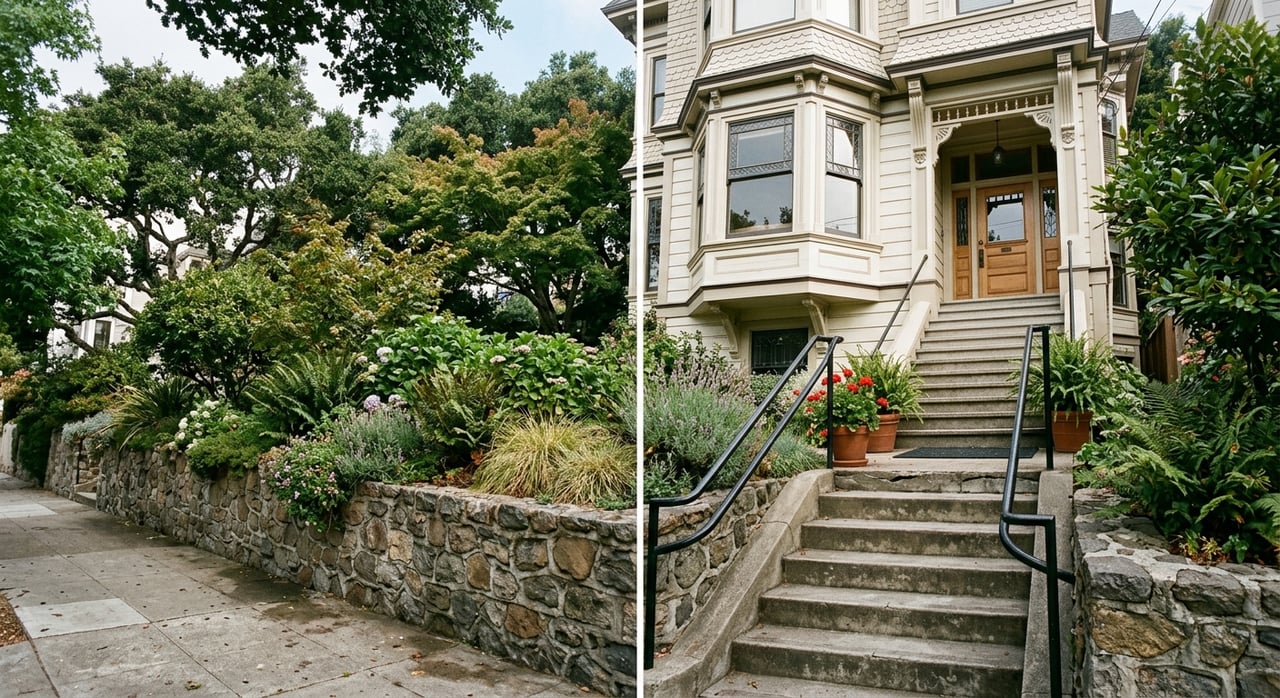
Housing style is another major point of contrast. Mill Valley’s historic survey describes a housing stock made up largely of late-19th- and early-20th-century residential buildings, primarily single-family homes. Architectural styles include Craftsman, Tudor, Queen Anne, Colonial Revival, Spanish Colonial Revival, Art Deco, and others.
That gives Mill Valley a more classic residential feel. If you are looking for traditional single-family homes and a more conventional suburban pattern, Mill Valley often aligns with that goal.
Sausalito has a more eclectic housing identity. The city’s historic design guidance points to Victorian, Bungalow, Arts and Crafts, Mid-Century, contemporary homes, and the area’s distinctive houseboats. Its harbor system still includes berths for houseboats and other vessels, reinforcing the maritime side of local housing.
If your home search is as much about personality as floor plan, Sausalito may feel more distinctive. If you want broader access to classic single-family housing in a more neighborhood-driven setting, Mill Valley may feel more straightforward.
Choosing between Mill Valley and Sausalito is less about which town is better and more about which one fits the way you want to live. If you want help comparing specific neighborhoods, home styles, and commute patterns in Marin, Janeen Anderson can help you make a confident, neighborhood-first decision.