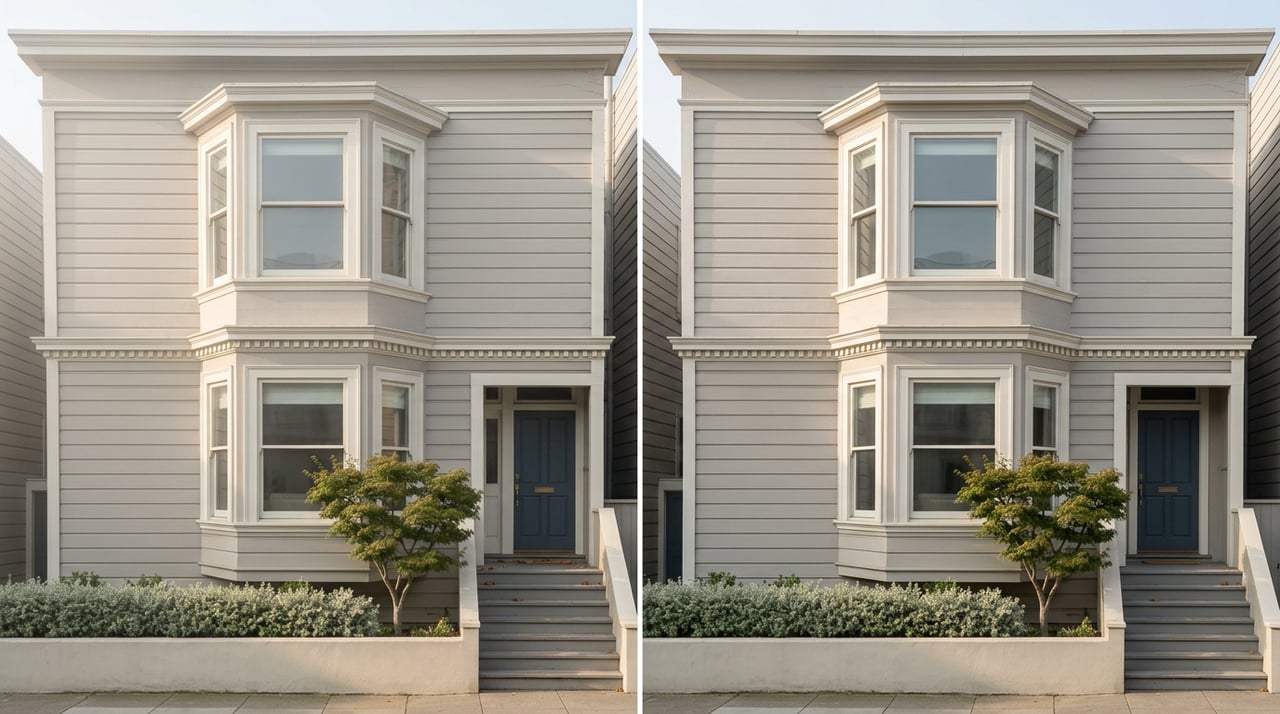
Buying a TIC in Cow Hollow: The Discount Is Real. The Clock Is the Catch.
You've toured three flats on the Union Street side streets. Two were condos, priced the way you expected. The third, an Edwardian with the same bones, the same bay window, arguably the better light, came in ten to twenty percent lower. The listing called it a TIC. Your first thought was probably: same house, better price, what's the trick.
The trick isn't the ownership structure itself. Fractional ownership in a two to four unit building is common enough in Cow Hollow that it barely registers as unusual anymore. The trick is timing. A TIC purchase in 2026 typically takes 45 to 60 days to close, against roughly 30 for a condo, and that gap is what actually determines whether the discount you're looking at survives the transaction or gets eaten alive by a deal that falls apart in week six.
A condo deed gives you a specific, mapped unit plus a share of the common areas, governed by a homeowners association with bylaws the state recognizes. A TIC deed gives you a percentage interest in the entire building. Your right to live in a particular flat comes from a private contract, the TIC agreement, not from a separate legal unit. Cow Hollow's building stock makes this distinction more than academic. The neighborhood's inventory leans heavily on pre-1979 Edwardian and Victorian flats, the kind of two and three unit buildings where converting every flat into its own condo has historically been slow, expensive, or blocked outright by San Francisco's conversion rules. TIC ownership grew up specifically to let buyers own a piece of that housing stock without waiting on a subdivision map.
That's the origin story. It explains why Cow Hollow has so much TIC inventory. It doesn't explain what your financing actually looks like today, which is where most of the confusion buyers walk in with turns out to be outdated.
Older TIC buildings in San Francisco were financed with a single group loan, every owner co-signed, every owner exposed if a co-owner defaulted. That structure still exists on some buildings that haven't refinanced in a decade or more, and it's the version that gives TICs their reputation for risk.
It is not how most buildings finance today. The current standard, and what you should confirm before you write an offer, is individual fractional financing: each owner gets a separate note and deed of trust, secured only by their own percentage interest. If your co-owner stops paying, the lender's remedy is limited to that owner's share. Your loan stands on its own.
The catch is that not every building qualifies. Lenders who write these loans, a short list that includes Bank of Marin and Redwood Credit Union among the specialty players, look closely at the number of units, the building's reserve history, and whether every unit is owner-occupied before they'll approve individual financing on a fractional interest. A rule worth carrying into any Cow Hollow TIC search: if a building is still on a shared group loan and can't be converted to individual financing, the ten to twenty percent discount stops looking like a bargain and starts looking like the price of shared liability. Walk away from that version unless the discount is extraordinary and you've actually modeled what a co-owner default would cost you.
| Condo Loan | TIC Fractional Loan | |
|---|---|---|
| Structure | Conforming, standardized | Non-conforming, portfolio |
| Typical rate | Baseline | About 0.25 to 0.75 points higher |
| Down payment | Often 10 to 20 percent | Often 15 to 25 percent |
| Typical close | About 30 days | About 45 to 60 days |
| Lender pool | Wide, conventional | Small, specialized |
Cow Hollow moves fast when a well-priced Edwardian flat hits the market. If you're competing against a buyer offering a 30-day condo close and you're structuring a TIC purchase that realistically needs 45 to 60 days, the seller sees that gap before they see your price. This is the friction that catches people off guard, not the ownership structure itself, the calendar it forces on you. Build the extra three to four weeks into your offer terms from the start, line up a TIC-experienced lender before you're in contract, and treat the closing timeline as a number you negotiate around, not a detail you discover after your offer is accepted.
Pricing snapshots from early 2026 put Cow Hollow's median sale price around three million dollars, with price per square foot near thirteen hundred and forty dollars. Different data providers report slightly different numbers for the same window, depending on whether they're counting listing price or sold price and how they draw the neighborhood boundary, which is itself a useful reminder for TIC shopping specifically: comparing a TIC to a condo only means something if you're comparing similar unit types, similar square footage, similar parking. A TIC discount measured against the wrong condo comp isn't a discount at all.
One more Cow Hollow-specific wrinkle worth knowing before you tour: many of the neighborhood's pre-1979 multi-unit buildings remain subject to San Francisco's local rent caps for any unit that isn't owner-occupied, regardless of whether the building is organized as a TIC or a condo. Owning a fractional interest doesn't exempt a rented unit in your building from that coverage. If your plan involves renting out a room or a unit down the line, that's a conversation to have with a real estate attorney before you close, not after.
Some buyers treat the TIC discount as temporary, planning to convert to condo ownership down the road and capture the value that conversion typically adds, often cited around ten to fifteen percent. The honest version of that plan depends entirely on building size. Two-unit buildings with fully owner-occupied units have historically had a faster path through San Francisco's conversion process, sometimes described as a bypass option outside the standard lottery. Buildings with five or more units face a queue that can run five to ten years or longer, and in practice rarely completes under current city rules. If you're buying a three or four unit Cow Hollow flat with conversion as part of your financial math, get a realistic timeline from someone who has actually walked a building through the process before you count on that upside.
The San Francisco Tenants Union publishes a plain-language overview of how condo conversion and TIC ownership interact with the city's tenant protections, worth a look if you want the process explained outside of a sales pitch.
Can I use an FHA or VA loan on a TIC? Government-backed programs have historically been restrictive with fractional ownership. Confirm current eligibility directly with a lender who writes TIC loans regularly rather than assuming your standard pre-approval carries over.
What happens if my co-owner defaults, on an individual loan? With true individual financing, the lender's claim is limited to the defaulting owner's fractional share. Your note and your occupancy are unaffected. This is the entire reason to confirm individual financing before you write an offer rather than assuming it.
Does every Cow Hollow TIC listing already have individual financing in place? No. Some older buildings are still on a shared master mortgage. Ask directly, and get it confirmed by your lender against the building's actual loan documents, not just the listing description.
If you're weighing a Cow Hollow TIC against a condo two blocks over, the discount on the sign is real. Whether it stays real through closing depends on details most listings don't spell out. That's the conversation worth having before you write the offer, not after.
Let's connect and walk through a specific building together. Janeen Anderson can pull the TIC agreement, check the financing structure, and tell you straight whether the discount you're looking at is one worth taking.