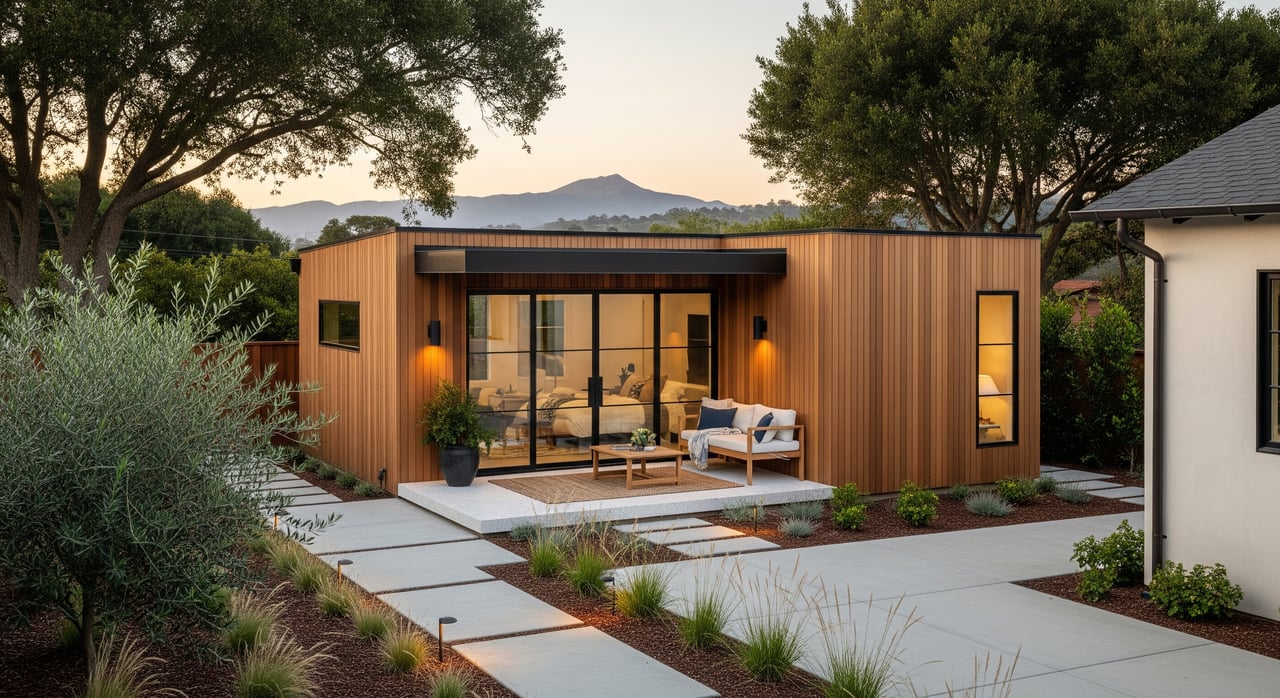
Thinking about adding an accessory dwelling unit to your San Rafael property? You are not alone. Homeowners across Marin are exploring ADUs to create flexible space, help family live nearby, and unlock rental income. In this guide, you will learn what counts as an ADU or JADU, how state rules interact with local standards, what site constraints matter most in San Rafael, and the practical steps to move from idea to permit. Let’s dive in.
ADU and JADU basics
An accessory dwelling unit is a secondary, independent home on the same lot as your primary house. Common formats include a detached backyard cottage, an attached addition, or a conversion of existing space like a garage or basement.
A Junior ADU is a smaller unit created within your main home. JADUs typically include a kitchenette, may share a bathroom with the main house, and are often capped at a smaller size than full ADUs.
Both ADUs and JADUs are designed to function as independent living areas with places to sleep, cook, and live, all while remaining on your single property.
Why ADUs make sense in San Rafael
- Create long‑term flexibility for multigenerational living.
- Add potential rental income in a strong local market.
- Improve resale appeal with a versatile second unit.
- Keep your project footprint modest compared to a full renovation.
State rules you should know
California sets a pro‑ADU baseline that applies in most residential zones. Local cities, including San Rafael, apply objective standards that fit local conditions. Key state‑level points include:
- Ministerial review: Many ADUs qualify for streamlined, ministerial approval with no discretionary design review. You still must meet objective standards.
- Sizes and types: State law distinguishes between full ADUs and JADUs. JADUs are typically limited to smaller sizes, while detached ADUs are commonly allowed at larger sizes in many jurisdictions.
- Setbacks and height: State rules limit how large side and rear setbacks can be for certain ADUs, while cities can still apply objective height and lot coverage limits.
- Parking: Several state exemptions reduce when extra parking is required, such as for conversions of existing space or when near transit. Local interpretation and mapping matter.
- Fees: Smaller ADUs often qualify for reduced impact or connection fees. Utility connections may still be required.
- Occupancy and rentals: Owner‑occupancy rules and short‑term rental policies have changed over time and vary by city and county.
The takeaway: State law makes ADUs broadly possible, and local San Rafael rules define the specific path on your lot.
San Rafael site checklist
Every lot is different. Before you sketch floor plans, run through this local checklist:
- Zoning and allowed uses: Confirm your zoning and whether any overlay zones or specific plans apply.
- Lot coverage and FAR: Objective development standards can influence the size and placement of a detached unit.
- Setbacks and height: Expect objective side, rear, and height limits that vary by ADU type and attachment.
- Slope and retaining walls: Hilly sites are common in San Rafael. Steeper lots may need geotechnical reports, engineered foundations, retaining walls, and grading permits.
- Utilities: Most areas connect to public sewer, but some properties use septic. Sewer laterals may need upgrades. Septic systems can restrict feasibility without improvements.
- Parking and access: Older neighborhoods can be tight. If parking is required, look into exemptions and whether tandem or driveway solutions are allowed. Consider construction access and emergency access.
- Design and compatibility: While subjective design review is limited for many ADUs, cities can apply objective standards for materials, windows, and rooflines.
- Historic areas: Projects within historic or conservation areas can trigger extra review.
- Flood and trees: Flood zones and protected trees affect siting and may require added permits.
- Short‑term rentals: Rules for short‑term rentals are separate from ADU rules. Verify what is allowed before planning for STR income.
Permit process and timeline
Here is the typical path from idea to move‑in:
- Preliminary check
- Confirm zoning, objective standards, and any overlays with the Planning Division.
- Identify sewer or septic status and potential utility requirements.
- Design and plans
- Prepare a site plan, floor plans, elevations, roof plan, and utility connections.
- Include an existing vs. proposed plan for conversions.
- Planning review
- Many ADUs are reviewed ministerially for code compliance and objective standards.
- Building permit and plan check
- Structural, mechanical, electrical, and plumbing reviews occur during this step.
- Inspections and final sign‑off
- City inspections verify code compliance during construction and before occupancy.
Timeline
- Simple conversions with complete plans can move in weeks to a few months.
- Detached units or hillside sites often take longer due to plan‑check cycles, grading, utilities, or specialty reports.
Fees and charges
- Building permit and plan‑check fees apply.
- Utility connection or upgrade fees can include sewer laterals and meter changes.
- Impact fees may be reduced for smaller ADUs, while larger ADUs can see more standard assessments.
Required approvals to confirm
- Zoning clearance or planning permit when applicable.
- Building permit for all trade scopes.
- Grading permits if you cut, fill, or add retaining walls.
- Sewer or septic permits, and health approvals if on septic.
- Encroachment permits for work in the public right‑of‑way.
- Tree, historic, or environmental permits if triggered.
Documentation to prepare
- Current site plan with structures, setbacks, driveway, and utilities.
- Existing and proposed floor plans and elevations.
- Topographic survey on sloped or tight sites.
- Soils or geotechnical report for new foundations or retaining walls.
- Utility connection plan and sanitary service details.
- Parking plan or parking‑exemption rationale if needed.
- Any easements or recorded covenants affecting development rights.
Costs, financing, and tradeoffs
Ballpark costs
- Conversions and small attached ADUs often start in the tens of thousands to low six figures.
- New, detached ADUs commonly range from low six figures to well over the 200k–400k+ range depending on size, finishes, slope, utilities, and contractor market.
- Hilly sites, septic work, and required retaining walls can significantly increase costs.
Pros
- Often lower per‑square‑foot cost than a full addition.
- Flexible use over time: family, rental, or workspace.
- Policy environment in California supports ADU production.
Cons
- Upfront costs, especially for site work and utilities.
- Potential neighborhood concerns that can affect timelines.
- Landlord responsibilities if you rent the unit.
- Loss of yard space and possible property tax impacts.
Financing options
- Cash or savings.
- Home equity line of credit or home equity loan.
- Cash‑out refinance.
- Construction loan or ADU‑focused lenders.
- Potential local or state incentive programs as available.
Quick start plan
- Assess your site: How flat is the yard? Where would utilities run? Is there space for construction access and staging?
- Choose a type: Conversion, attached, detached, or a JADU inside the main home.
- Sketch a budget: Pair a rough size with a cost range, then add a contingency for site work.
- Talk to the city: Confirm zoning, objective standards, and utility requirements early.
- Assemble your team: Consider an architect or designer, structural engineer for hillside work, and a contractor experienced with ADUs.
- Map your timeline: Factor in design, plan check, and build time. Add buffer for resubmittals.
Use cases that work in Marin
- Multigenerational living: Keep loved ones close while offering privacy and accessibility.
- Long‑term rental: Add diversified income to offset your mortgage.
- Work or studio space: Create a focused, separate area for productivity or hobbies.
The bottom line
An ADU can be a smart, flexible upgrade for a San Rafael property. State law opens the door, and local rules, site conditions, and project design shape what is possible. With clear goals, early checks on zoning and utilities, and an experienced team, you can move from idea to permit with fewer surprises. If you want help understanding how an ADU could impact your home’s value, resale strategy, or future buyer appeal, connect with a local advisor who knows both San Rafael and Marin market dynamics.
Ready to explore your options or talk through the numbers for your property? Reach out to Janeen Anderson to get a neighborhood‑informed plan and introductions to trusted local pros.
FAQs
What types of ADUs are possible on a San Rafael lot?
- Most homeowners consider a detached cottage, an attached addition, a conversion of existing space, or a smaller JADU created within the main house.
How big can an ADU be, and what is a JADU?
- State law distinguishes full ADUs from JADUs, with JADUs typically limited to smaller sizes inside the main home, while detached ADUs are commonly allowed at larger sizes in many jurisdictions.
Will I need to add parking for my ADU?
- There are several state‑level parking exemptions, such as for conversions or proximity to transit, but local mapping and standards determine what applies on your lot.
Can I use my ADU as a short‑term rental in San Rafael?
- Short‑term rental policies are separate from ADU rules and vary by city and county, so verify current regulations before planning for STR income.
Do San Rafael ADUs require the owner to live on site?
- Owner‑occupancy requirements have changed over time, and rules differ for ADUs and JADUs; check the latest local policy for your property type.
How long does permitting and construction usually take?
- Simple conversions with complete plans can move in weeks to a few months, while detached or hillside projects often take longer due to plan checks, site work, and inspections.
What are typical total costs for an ADU in Marin?
- Conversions and small attached units often land in the low six figures, while detached builds can range higher based on size, finishes, slope, and utility needs.
Who should I contact first to get started?
- Start with a planning check to confirm zoning, objective standards, and utilities, then engage a designer or architect to shape a code‑compliant plan and budget.